
Types of Ecommerce
 RIbsadmin
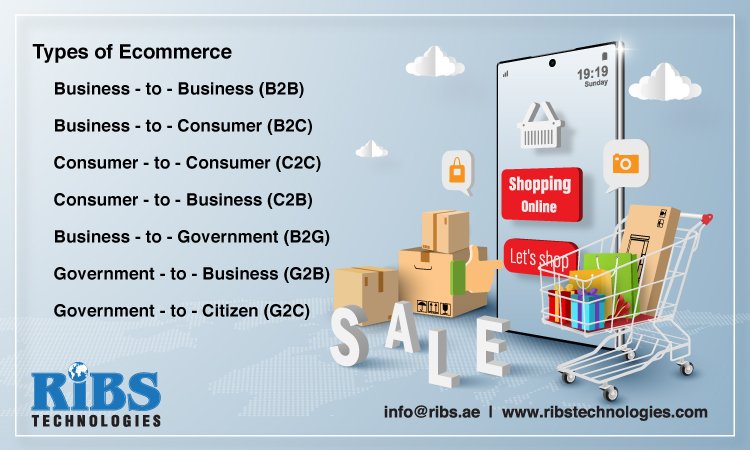
Ecommerce, or electronic commerce, has revolutionized the way businesses operate and consumers shop. Understanding the various types of ecommerce can help businesses choose the right model for their needs and leverage the appropriate tools to succeed. This blog explores the primary types of ecommerce, highlighting the importance of ecommerce software, ecommerce site builders, and ecommerce development services in building and managing successful online stores.
Primary Types of Ecommerce
- Business to Business (B2B)
Business to Business (B2B) ecommerce involves transactions between businesses. This model is typically used by wholesalers, manufacturers, and distributors who sell products or services to other businesses.
Key Features:
- Bulk Orders: Often involves large volume purchases.
- Longer Sales Cycles: Requires more negotiation and relationship building.
- Specialized Ecommerce Platforms: May require custom ecommerce software to handle complex transactions and integrations.
- Business to Consumer (B2C)
Business to Consumer (B2C) ecommerce is the most common model, involving transactions between businesses and individual consumers. Online retail stores are prime examples of B2C ecommerce.
Key Features:
- Wide Audience: Targets a broad consumer base.
- Shorter Sales Cycles: Typically involves quick decision-making.
- User-Friendly Ecommerce Sites: Utilizes ecommerce site builders to create attractive, easy-to-navigate websites.
- Consumer to Consumer (C2C)
Consumer to Consumer (C2C) ecommerce involves transactions between individual consumers. Platforms like eBay and Craigslist facilitate these transactions by providing a marketplace for users to buy and sell products.
Key Features:
- Marketplace Platforms: Requires robust ecommerce platforms to manage multiple sellers and buyers.
- Trust and Security: Emphasizes user reviews and secure payment options.
- Flexible Ecommerce Solutions: May utilize custom ecommerce web development to accommodate unique marketplace needs.
- Consumer to Business (C2B)
Consumer to Business (C2B) ecommerce is a model where individuals sell products or services to businesses. Examples include freelance platforms where professionals offer their services to companies.
Key Features:
- Reverse Auction Models: Allows individuals to bid on providing services or products to businesses.
- Service-Based Transactions: Often involves services rather than physical products.
- Specialized Ecommerce Development: May require ecommerce development services to build platforms that support this model.
Emerging Types of Ecommerce
- Business to Government (B2G)
Business to Government (B2G) ecommerce involves transactions between businesses and government agencies. This can include the provision of goods and services, such as office supplies or consulting services.
Key Features:
- Regulated Transactions: Requires compliance with government regulations and procurement processes.
- Specialized Ecommerce Applications: Utilizes ecommerce software solutions designed to meet government standards.
- Government to Business (G2B)
Government to Business (G2B) ecommerce involves transactions where government entities sell products or services to businesses. This could include data services, government publications, or contract opportunities.
Key Features:
- Information Distribution: Often involves the provision of data and information services.
- Ecommerce Integration: Requires integration with government databases and systems.
- Mobile Commerce (M-Commerce)
Mobile Commerce (M-Commerce) refers to ecommerce transactions conducted via mobile devices such as smartphones and tablets. This model leverages mobile apps and responsive websites to facilitate shopping on the go.
Key Features:
- Mobile-Friendly Design: Emphasizes responsive web design and mobile app development.
- Convenient Payment Options: Utilizes mobile payment gateways like Apple Pay and Google Wallet.
- Mobile-First Ecommerce Development: Requires ecommerce development services to ensure optimal performance on mobile devices.
- Social Commerce (S-Commerce)
Social Commerce (S-Commerce) integrates social media platforms with ecommerce to facilitate buying and selling directly through social networks. Platforms like Instagram and Facebook have introduced features that allow users to shop within the app.
Key Features:
- Integrated Shopping: Combines social media and ecommerce functionalities.
- Influencer Marketing: Leverages social media influencers to drive sales.
- Custom Ecommerce Solutions: May require custom ecommerce development to integrate social features with ecommerce platforms.
Conclusion
Understanding the different types of ecommerce is essential for businesses to choose the right model and leverage the appropriate tools for success. From B2B and B2C to emerging models like M-Commerce and S-Commerce, each type has unique features and requirements. By utilizing ecommerce software, ecommerce site builders, and ecommerce development services, businesses can create effective and user-friendly online stores tailored to their specific needs. Embracing the right ecommerce model and tools will drive growth, enhance customer satisfaction, and ensure long-term success in the digital marketplace.
Request a Free Quote: Understand the value our Ecommerce software can bring to your business with a free quote. Request a free quote now!